


What’s a Pretty Good Ewe?
by Sarah Carr, Ph.D., Assistant Professor, Kentucky State University

What’s “Pretty Good”?
Oftentimes we hear people make the comment, “My neighbor has some pretty good ewes.” Depending on the context, that could mean those ewes have average to high body condition scores on pasture, do not need frequent deworming, or have many lambs. Ultimately, “pretty good ewes” are those that make money. Money-making ewes are prolific, parasite resistant,
maintain their health, and wean fast-growing, quality lambs.
The Role of Genetics
“Pretty Good” is the combination of genetics plus management, and therefore, both must be considered when maximizing production. In offspring, 50% of the genetics come from the ewe and 50% come from the ram. While we place tremendous emphasis on the ram, he is only half the equation. You can have the best ram in the country, but if the ewe provides a poor uterine environment or insufficient milk, the contribution of genetics from the ram will never reach full potential. The genetics of the ewe is critical to maximizing overall production in the flock.
Another consideration is the production goal. Are you producing purebred ewes for seedstock or composite crossbred commercial ewes? Purebred females offer the predictability and quality needed to sell registered stock. However, for a commercial operation, a crossbred female is often the "pretty good" choice due to hybrid vigor.
Specifically, “pretty good” ewes are oftentimes maternal breeds which influences the ability for her to 1) have and wean live offspring, and 2) support fast-growing, quality lambs. Common maternal breeds in sheep include Katahdin, Rambouillet, Polypay, among others.
Fertility
Fertility involves the ability to conceive, maintain a pregnancy, and wean healthy offspring each year. We can use indicators to get an idea of the overall fertility of the breeding ewes.
Two indicators are conception rates and pregnancy rates which refer to the ability to conceive and maintain a pregnancy each year. Prolificacy refers to the number of lambs born to each ewe. In a commercial flock, the goal is to sell as many pounds of quality lamb as possible. Producers should aim for a 200% lamb crop, meaning each breeding ewe has two offspring each year. Pushing prolificacy further can lead to a trade-off where the dam cannot raise them all, resulting in "bottle babies" and lower growth rates. While genetics influence this heavily, management plays a significant role in achieving higher percentages. Finally, fecundity encompasses the indicators above and includes whether or not she can successfully wean healthy lambs. Maximizing fertility is profitable because a ewe that raises twins to weaning produces more pounds over her lifetime compared to one that raises a single.
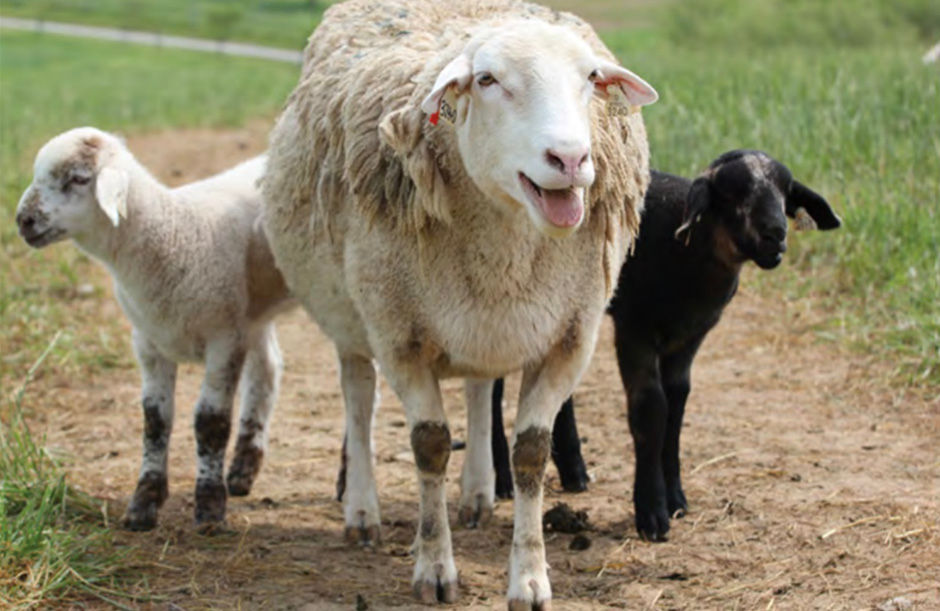
Mothering Ability and Milk Production
Fertility must be combined with maternal traits like eagerness to care for offspring and adequate milk production. A “pretty good” ewe should be able to lamb unassisted and be attentive to her offspring. She also must be able to produce enough nutritious milk to sustain the lamb until it is weaned. A ewe with multiples must produce significantly more milk than one with a single lamb, and if she is unable to do so, she is not able to produce quality lambs.
Quality Lambs
Pounds of meat at the market only matter if the quality is high. Lambs need the most muscle possible with minimal fat cover to meet Prime or Choice quality grades. In April 2026, the price difference between "Choice/Prime" and "Choice 2" grades was $17.48, and the difference between “Choice/Prime and “Good/Choice” was $87.48 (Figure 3). Quality grade significantly impacts the bottom line.

Tools to Improve the Flock
1. Have a Breeding Plan: It is critical to have clearly defined goals for production and outline what is needed to meet those goals. Concerning breeding ewes, it is recommended to select prolific genetics from maternal breeds, and plan an annual breeding timeline to align with management techniques and the identified market.
2. Use Crossbreeding: Crossbreeding for commercial production can be beneficial due to hybrid vigor. Choosing breeds that complement marketing goals and adapt well to the production environment will ensure the ewes have the best opportunity for success. Crossbreeding a purebred ram and ewe together will provide maximum performance compared to crossbreeding a purebred sire to a commercial ewe.
3. Cull Underperforming Ewes: Ewes that perform poorly compared to peers of the same age should be sent to slaughter, not sold to a neighbor. Exceptions include yearlings that had a single lamb or ewes that faced traumatic predator attacks.
4. Match Reproduction to Management: Producers should always match the production system to the environment. Ewes from a confinement system are not going to raise multiple quality lambs on pasture. Additionally, it is critical to choose ewes from a producer in a similar climate to ensure they can thrive when exposed to extreme weather or temperature.
5. Meet Nutritional Needs: The nutrient requirements of ewes change based on their stage of production. It is beneficial to practice flushing which is feeding supplemental grain or high-quality forage 2–4 weeks before and after introducing the ram. This increases ovulation and can improve conception, pregnancy, and lambing rates. Next, it is necessary to maintain optimal body condition, aiming for a score of 3.0-3.5 for breeding (Figure 4). Finally, it is helpful to strategically feed ensuring that appropriate nutrition is provided based on the state of production. Particularly, provide high-energy supplementation in late gestation and lactation to reduce the chance of nutritional deficiencies (Figure 5). Separate ewes carrying twins and triplets from those with singles to feed more efficiently.


Take Home Message
"Pretty Good" ewes make money. They are fertile, have strong mothering abilities, and produce enough milk to raise fast-growing, high-quality lambs. Success is achieved by coupling best management practices with prolific genetics.
Dr. Sarah Carr is an Assistant Professor of Animal Science in the School of Agriculture and Natural Resources at Kentucky State University. Through an integrated research and extension program, her work primarily focuses on identifying practical solutions to enhance the productivity and profitability of ruminant production systems. A core area of emphasis involves the comprehensive study of whole animal health, physiology, and fertility with particular attention to the relationship between nutrition and reproductive outcomes.





Comments